
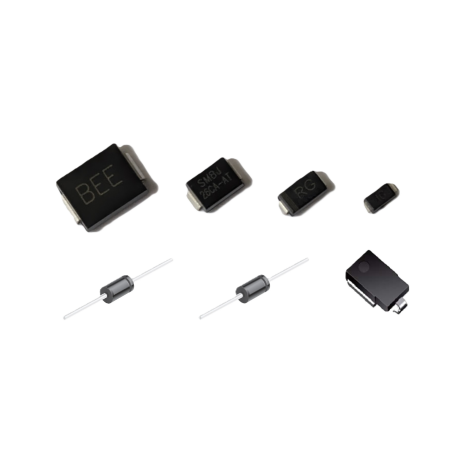
The product passes and complies with the following international testing standards and specifications.
Performance standards (IEC 61000-4 series)
IEC 61000-4-2 (ESD): Test the component's ability to withstand electrostatic discharge.
IEC 61000-4-4 (EFT):Test the component's tolerance to fast electrical pulse trains. These pulses typically originate from the switching of inductive loads and can cause interference to the circuit.
IEC 61000-4-5 ( Lightning):Test the ability of the component to withstand induced surge voltage caused by lightning strikes.
ITU-T K series
ITU-T K.20: Methods and requirements for overvoltage and overcurrent withstand tests of telecommunications equipment.
ITU-T K.21: The withstand requirements of devices such as telephones, modems, and routers installed at the user end under overvoltage and overcurrent conditions.This standard is typically more stringent than K.20 because user-end equipment is more susceptible to lightning strikes and power interference.
ITU-T K.44:Test methods and standards for lightning surge protection, especially for equipment on communication lines.This standard defines the test waveforms and levels used to simulate lightning-induced surges, and is a key basis for evaluating the lightning protection capabilities of protective components and circuits.
Environmental and Materials Regulations
RoHS:This is an EU directive that restricts the use of hazardous substances such as lead, mercury, cadmium, hexavalent chromium, polybrominated biphenyls (PBBBs), and polybrominated diphenyl ethers (PBDEs) in electrical and electronic equipment. All TVS components sold in the EU market must comply with RoHS standards.
REACH :This is another EU chemical management regulation that ensures a high level of protection for chemical substances and requires companies to be responsible for the chemicals used in their products.
Stress testing standards in the automotive industry
AEC-Q101:TVS components used in automotive electronics all comply with this standard.