
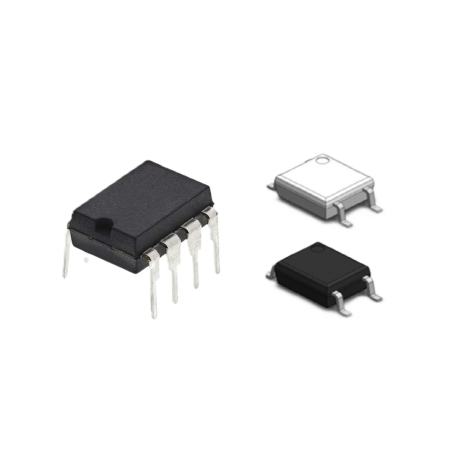
Photocoupler
A photocoupler, also commonly known as an opto-isolator, is an electronic component that utilizes light as a medium to transmit electrical signals. It achieves complete electrical isolation between two circuits, thereby protecting sensitive components from high-voltage surges or noise interference.
Operating
A photocoupler consists of a light-emitting element and a light-sensitive element, both encapsulated within a single non-conductive housing. The most prevalent configuration features a Light-Emitting Diode (LED) paired with a phototransistor.
-
Signal Input: When an electrical signal is input to the emitting side, the LED illuminates.
-
Light Transmission: The emitted light traverses a minute insulating gap and illuminates the phototransistor on the receiving side.
-
Signal Output: Upon sensing the light, the phototransistor is activated and conducts current, successfully transmitting the signal to the output circuit.
Because light serves as the exclusive link between the input and output circuits, there is no direct electrical contact between them. This mechanism allows the photocoupler to effectively block high voltages, electrical noise, or ground loops, preventing them from disrupting or damaging sensitive output circuitry.
Key Advantages and Applications
-
Electrical Isolation (Galvanic Isolation):This is the core functionality of a photocoupler. It enables low-voltage control signals to safely regulate high-voltage circuits, protecting both control components and operators. It plays a critical role in power supplies, motor drivers, and industrial control systems.
-
Noise Immunity:By severing the direct electrical connection, the photocoupler prevents noise from the output circuit from bleeding back into the input circuit, thereby ensuring high signal integrity.
-
High-Speed Switching:Select photocouplers are specifically engineered for high-speed switching operations, making them ideal for digital communication and data transmission applications.
Common Application Areas
-
Power Supplies:Used in feedback loops for voltage regulation while maintaining isolation between the primary input and secondary output.
-
Motor Drives:Isolates low-voltage microcontrollers (MCUs) from high-power motor drive circuitry.
-
Industrial Automation:Separates control systems from noisy, high-voltage machinery on the factory floor.
-
Medical Equipment:Ensures that high voltages within medical instrumentation pose no hazard to patients.